Shower door handles are a small component in a shower enclosure system, but they play a critical role in functionality, safety, durability, and overall project consistency. For B2B buyers such as glass factories, shower enclosure manufacturers, distributors, and project contractors, selecting the correct shower door handle type is not a matter of decoration—it is a technical and commercial decision.
Different projects require different handle structures, materials, finishes, installation methods, and specifications. A handle that works well for a residential bathroom may not be suitable for a hotel project, a coastal market, or a large apartment development. In addition, compatibility with glass thickness, hole size, and door opening system is essential to avoid installation issues and after-sales problems.
This article provides a comprehensive B2B overview of shower door handle types, focusing on application, glass compatibility, installation requirements, material selection, surface finishes, standard sizes, and OEM customization options. It is designed to help professional buyers make informed decisions and standardize their product selection across different markets.
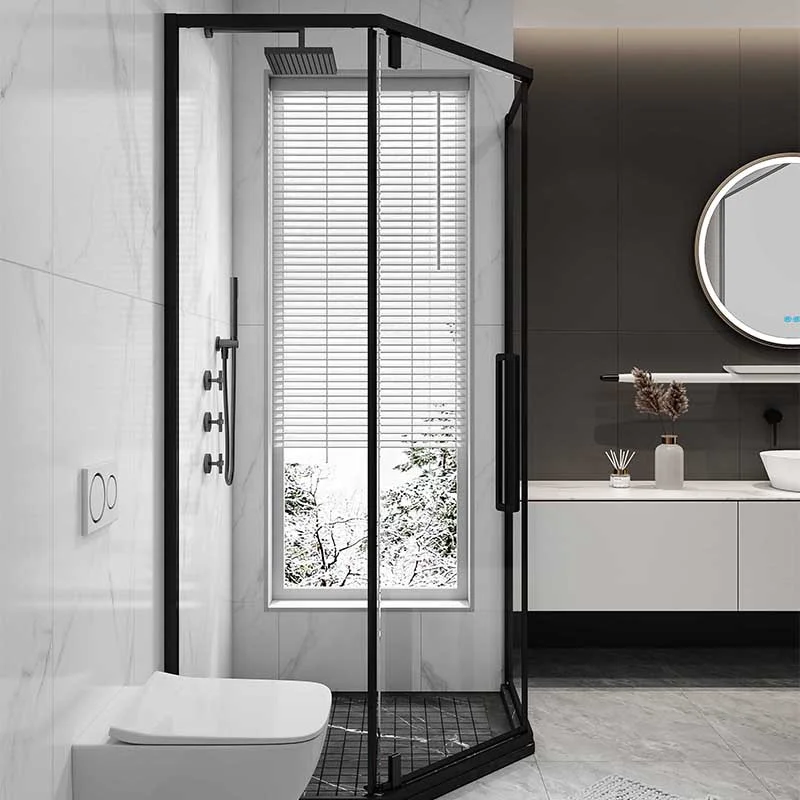
1.Shower Door Handle Types by Application Market
From a B2B perspective, shower door handle selection should always start with the target application market. Different markets place different priorities on cost, durability, aesthetics, and volume supply.
1.1 Residential Shower Projects
Residential projects usually prioritize:
• Cost efficiency
• Clean and simple design
• Compatibility with standard glass thickness
Common handle types used in residential projects include:
• Knob-style shower door handles
• Short back-to-back handles
• Basic towel bar handles
Materials such as stainless steel 304, aluminum, or zinc alloy are widely used. Finishes like chrome and brushed stainless steel remain the most popular due to ease of matching with other bathroom hardware.
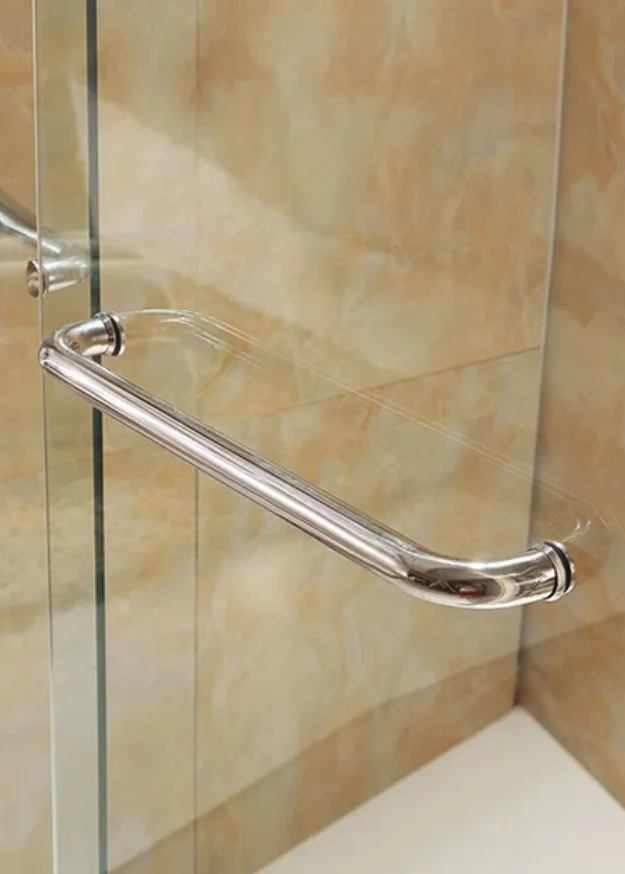
1.2 Hotel and Hospitality Projects
Hotel projects place a much higher emphasis on:
• Durability and long-term performance
• Corrosion resistance
• Consistent appearance across large quantities
• Safety and comfortable grip
In hospitality projects, commonly specified handle types include:
• Back-to-back handles with ergonomic grip
• Integrated towel bar handles
• Longer handles for ease of use
Stainless steel 304 or 316 stainless steel is strongly recommended, especially for coastal or humid regions. Finish consistency is critical, as shower handles must match hinges, knobs, and other bathroom hardware throughout the entire project.
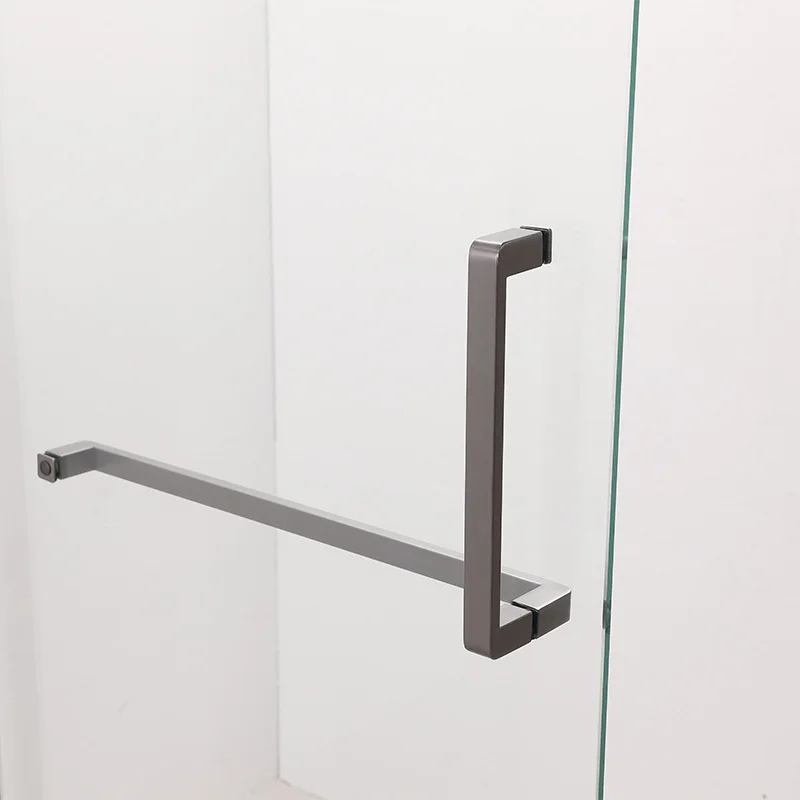
1.3 Apartment and Real Estate Developments
Large apartment developments require:
• Stable supply capability
• Standardized specifications
• Cost control without sacrificing quality
Popular handle types for this market include:
• Standard back-to-back handles
• Medium-length straight handles
• Simple square or round profile designs
For this segment, suppliers often offer OEM packaging, bulk supply, and standardized sizes to simplify procurement and installation.
1.4 Commercial and Public Shower Rooms
Commercial shower rooms such as gyms, swimming pools, and public facilities demand:
• High durability
• Anti-corrosion performance
• Easy maintenance
Handle designs for this segment are typically:
• Functional rather than decorative
• Robust in construction
• Resistant to frequent use
Stainless steel is the preferred material, and finishes should prioritize durability over appearance.
2.Shower Door Handle Types by Glass Door System
From a technical standpoint, shower door handles must be compatible with the door structure and opening system. This is one of the most important considerations for B2B buyers.
2.1 Frameless Glass Shower Door Handles
Frameless shower doors are the most common application in modern projects. Handles for frameless doors must be compatible with:
• Glass thickness: typically 8mm, 10mm, or 12mm
• Pre-drilled glass holes
• Direct glass-to-handle mounting
Common handle types include:
• Back-to-back handles
• Knob handles
• Towel bar combination handles
Back-to-back handles are especially popular because they provide balanced force on both sides of the glass, improving durability and user comfort.
2.2 Framed Shower Door Handles
Framed shower doors use aluminum or stainless steel frames to support the glass panel. Handles for framed systems are usually:
• Smaller in size
• Mounted through the frame rather than directly on glass
• Designed to match frame profiles
Knob-style and short pull handles are commonly used in framed systems due to their compact design and easy installation.
2.3 Sliding Shower Door Handle Types
Sliding shower doors require special handle designs to avoid interference with door movement.
Common options include:
• Finger pull handles
• Recessed or flush handles
• Low-profile knob handles
These handles are typically installed on one side of the glass and are designed to provide sufficient grip while maintaining clearance between sliding panels.
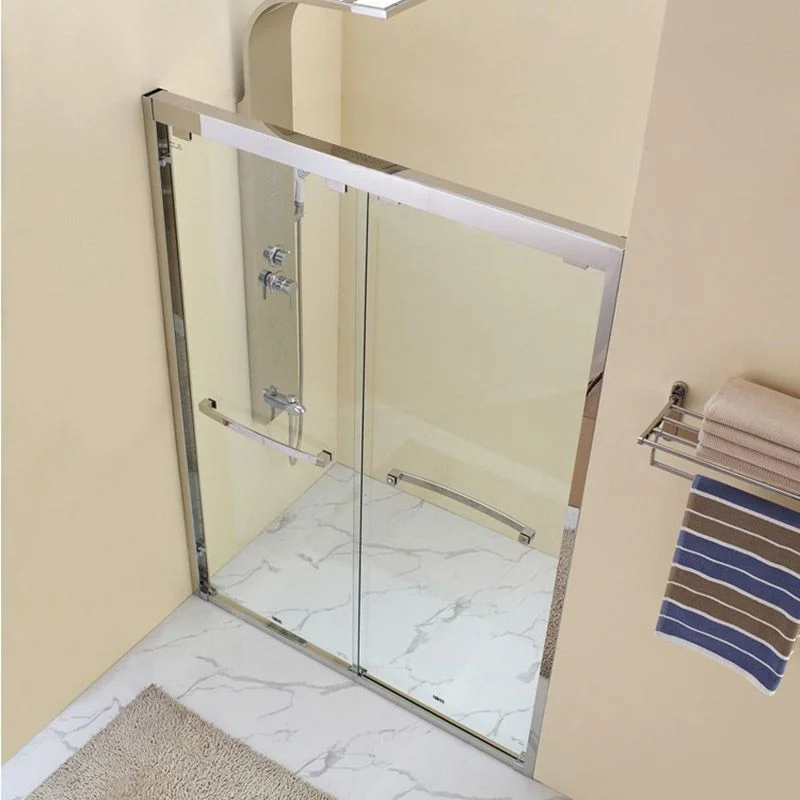
2.4 Pivot and Hinged Shower Door Handles
Pivot and hinged shower doors require handles that can withstand repeated opening and closing movement.
Popular handle types include:
• Back-to-back handles
• Longer pull handles for better leverage
• Ergonomic designs for hotel and commercial projects
For hinged systems, handle placement and length must be carefully coordinated with hinge position and door size.
3.Shower Door Handle Types by Installation Method
Installation requirements are a key concern for glass processors and installers. Selecting the right installation type reduces installation time and minimizes errors.
3.1 Through-Glass Drilled Handles
These handles are mounted through pre-drilled holes in the glass panel.
Key characteristics:
• Secure and durable mounting
• Suitable for frameless glass doors
• Requires precise glass machining
Typical hole diameters range from 8mm to 12mm, depending on handle design.
3.2 Single-Hole Shower Door Handles
Single-hole handles are commonly used for:
• Knob handles
• Compact pull handles
They are easier to install and require minimal glass processing, making them suitable for high-volume residential projects.
3.3 Double-Hole Shower Door Handles
Double-hole handles provide:
• Improved stability
• Better force distribution
• Suitability for longer handle designs
They are widely used in hotel and commercial projects where durability is a priority.
3.4 Clamp-On Shower Door Handles (No Drilling)
Clamp-on handles are designed to be installed without drilling holes in the glass.
Advantages include:
• No glass machining required
• Reduced installation risk
• Suitable for retrofit projects
However, they may have limitations in load capacity and long-term stability compared to through-glass designs.
4.Shower Door Handle Types by Design Structure
Design structure affects both functionality and market positioning.
4.1 Back-to-Back Shower Door Handles
Back-to-back handles consist of two identical handles mounted on both sides of the glass.
Advantages:
• Balanced force distribution
• Clean and professional appearance
• Widely accepted in international markets
This type is one of the most popular options for frameless shower doors in B2B projects.

4.2 Knob Style Shower Door Handles
Knob handles are compact and cost-effective.
They are commonly used in:
• Framed shower doors
• Residential projects
• Budget-sensitive markets
Knob handles usually require only one mounting hole, simplifying installation.

4.3 Towel Bar Combination Handles
These handles combine a pull handle with a towel bar function.
They are widely used in:
• Hotel bathrooms
• High-end residential projects
This design improves functionality while reducing the need for additional bathroom accessories.
4.4 Finger Pull and Recessed Handles
Finger pull handles are specifically designed for sliding shower doors.
Characteristics:
• Low profile
• Flush with glass surface
• Minimal visual impact
They are essential for sliding systems where clearance is limited.
5.Shower Door Handle Types by Material
Material selection directly impacts durability, corrosion resistance, and cost.
5.1 Stainless Steel Shower Door Handles
Stainless steel is the most widely used material in B2B shower hardware.
• Stainless Steel 304: Suitable for most indoor environments
• Stainless Steel 316: Recommended for coastal areas and high-humidity environments
Stainless steel handles offer excellent strength, corrosion resistance, and long service life.

5.2 Aluminum Shower Door Handles
Aluminum handles are lightweight and cost-effective.
They are often used in:
• Large-volume residential projects
• Markets with strict cost control
Surface treatment quality is critical to ensure durability.
5.3 Zinc Alloy Shower Door Handles
Zinc alloy handles allow for more decorative designs.
Advantages:
• Flexible design possibilities
• Lower tooling cost
However, corrosion resistance is generally lower than stainless steel, so proper surface finishing is essential.
5.4 Brass Shower Door Handles
Brass handles are used in premium projects.
They offer:
• Solid feel
• High-end appearance
Due to higher material cost, brass handles are typically used in luxury hotels or upscale residential projects.
6.Shower Door Handle Types by Surface Finish
Surface finish selection affects appearance, durability, and compatibility with other hardware.
6.1 Polished and Chrome Finishes
These finishes provide:
• Bright appearance
• Easy matching with other bathroom fittings
Chrome remains one of the most commonly specified finishes worldwide.
6.2 Brushed Stainless Steel Finish
Brushed finishes offer:
• Modern appearance
• Better resistance to fingerprints
They are popular in commercial and hotel projects.
6.3 Matte Black Finish
Matte black is increasingly popular in modern projects.
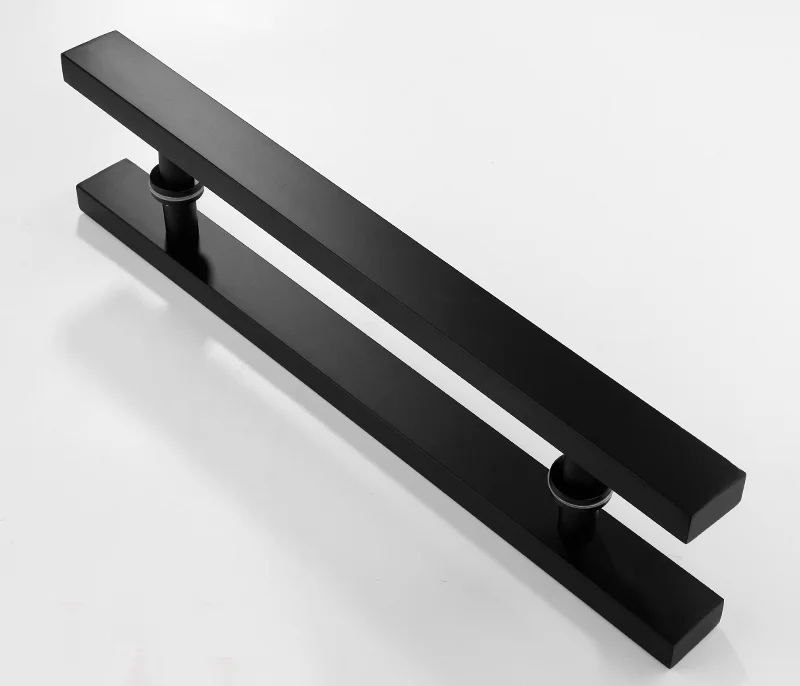
For B2B buyers, it is important to distinguish between:
• Powder coating
• PVD coating
PVD coating generally offers better durability and color consistency.
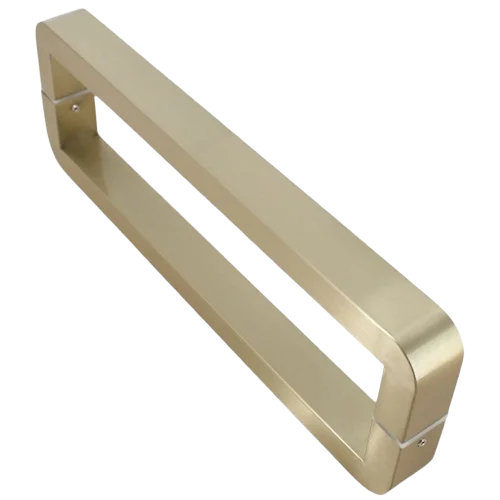
6.4 Gold and Brushed Brass Finishes
Gold finishes are commonly used in high-end projects.
Consistency across batches is critical for large-scale developments.
7.Standard Sizes and Specifications for B2B Supply
Standardization is essential for efficient procurement and installation.
7.1 Common Handle Lengths
Typical handle lengths include:
• 150mm
• 200mm
• 300mm
• 400mm
Longer handles are often specified for hotel projects, while shorter handles are common in residential applications.
7.2 Glass Thickness Compatibility
Most shower door handles are designed for:
• 8mm glass
• 10mm glass
• 12mm glass
Clear specification of glass thickness avoids installation issues.
7.3 Hole Size and Spacing
Standard hole sizes and spacing must be clearly defined in technical drawings to ensure compatibility with glass processing equipment.
8.Frequently Asked Questions
Are shower door handles interchangeable between brands?
Not always. Hole size, spacing, and glass thickness compatibility must be confirmed.
What is the most commonly used shower door handle type for hotel projects?
Back-to-back stainless steel handles with brushed or polished finishes.
Which material is recommended for coastal projects?
Stainless steel 316 due to superior corrosion resistance.
Can shower door handles be customized for OEM orders?
Yes, we offer OEM options for size, finish, and branding.
Conclusion
Shower door handles may appear to be a small component, but they have a significant impact on usability, durability, and project success. For B2B buyers, understanding the different shower door handle types—by application, door system, installation method, material, and finish—is essential for making the right selection.
By choosing standardized, compatible, and reliable handle solutions, distributors, manufacturers, and project contractors can improve installation efficiency, reduce after-sales issues, and deliver consistent quality across all shower enclosure projects.