Introduction
A door stop may seem like a small and simple hardware accessory, but in real-world applications, choosing the wrong door stopper can lead to damaged doors, cracked walls, broken glass, excessive noise, and even safety risks. Different door materials behave very differently when opening and closing, and that is why door type plays a critical role in door stopper selection.
Wooden doors, glass doors, metal doors, and fire-rated doors all vary in weight, rigidity, closing force, and usage frequency. A door stopper that works well for a lightweight wooden bedroom door may fail completely when installed on a heavy commercial metal door or a fire-rated door with a self-closing mechanism.
In this article, we will provide a comprehensive guide to choosing the best door stops for:
• Wooden doors
• Glass doors
• Metal doors
• Fire-rated doors
We will explain recommended door stop types, mounting methods, safety considerations, and common mistakes, helping homeowners, contractors, architects, and project managers make the right decision for each application.
Why Door Type Matters When Choosing a Door Stop
Before discussing specific door materials, it is important to understand why door type has such a strong influence on door stopper performance.
1.Door Weight Differences
• Wooden doors are usually medium weight
• Glass doors can be heavy and fragile
• Metal doors are often heavier and more rigid
• Fire-rated doors are extremely heavy due to internal fire-resistant cores
The heavier the door, the more impact force it generates when opening. A door stopper must be strong enough to absorb or resist that force.
2.Opening Force and Usage Frequency
• Residential doors are opened a few times per day • Office, hotel, or commercial doors may be opened hundreds of times daily • Fire doors often use self-closing devices, increasing closing force
High-frequency use requires durable materials and secure fixing methods.
3.Safety and Compliance Requirements
Some doors, especially fire-rated doors, are governed by building codes and fire regulations. Using the wrong type of door stopper may:
• Violate safety standards
• Prevent proper door closing during emergencies
4.Mounting Surface Limitations
Different doors require different mounting solutions:
• Wooden floors vs concrete floors
• Glass doors that cannot be drilled
• Metal doors requiring heavy-duty anchors
Understanding these factors ensures the selected door stopper performs safely and reliably over time.
Best Door Stoppers for Wooden Doors
Characteristics of Wooden Doors
Wooden doors are one of the most common door types worldwide and are widely used in:
• Residential homes
• Hotels and apartments
• Offices and meeting rooms
Typical characteristics include:
• Medium weight
• Moderate opening force
• Wooden frames and walls that can be easily damaged
While wooden doors are less demanding than metal or fire doors, impact protection and noise reduction are still essential.
Recommended Door Stop Types for Wooden Doors
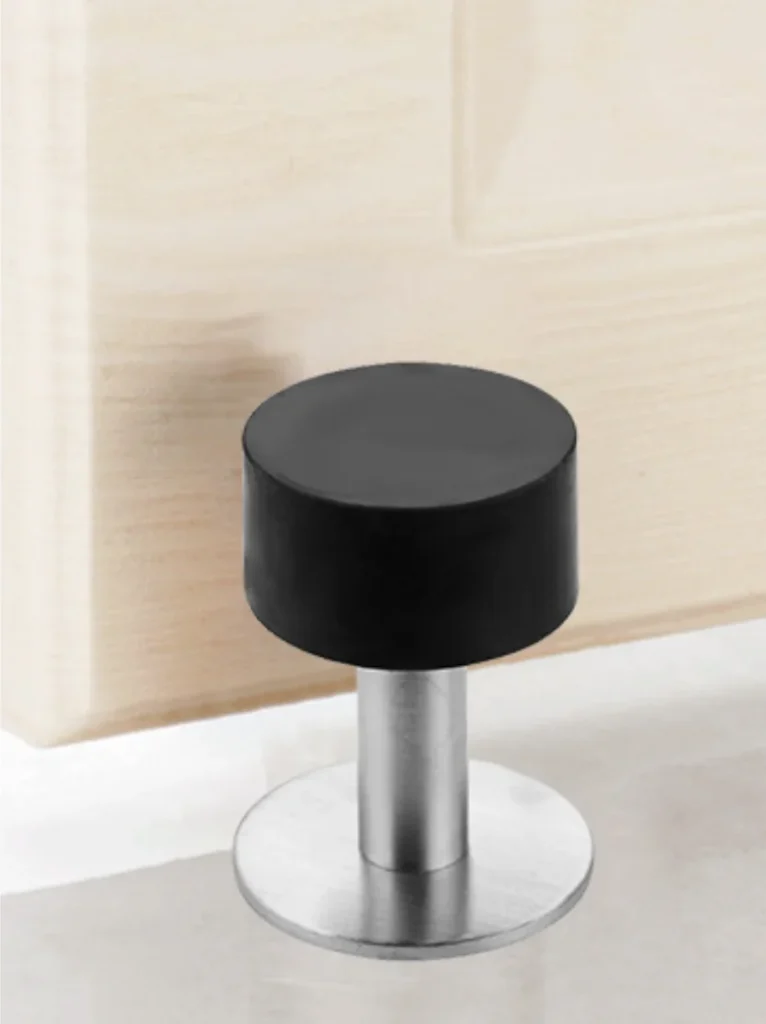
1.Floor-Mounted Door Stoppers
Floor-mounted door stoppers are one of the most popular choices for wooden doors.
Advantages:
• Strong stopping power
• Protects both door and wall
• Suitable for inward or outward opening doors
They are especially effective when the wall behind the door is painted or wallpapered.
2.Wall-Mounted Door Stoppers
Wall-mounted door stoppers are installed directly on the wall behind the door.
Advantages:
• Simple installation
• No floor drilling required
• Suitable for lightweight wooden doors.
However, they must be installed at the correct height to align with the door handle or impact point.
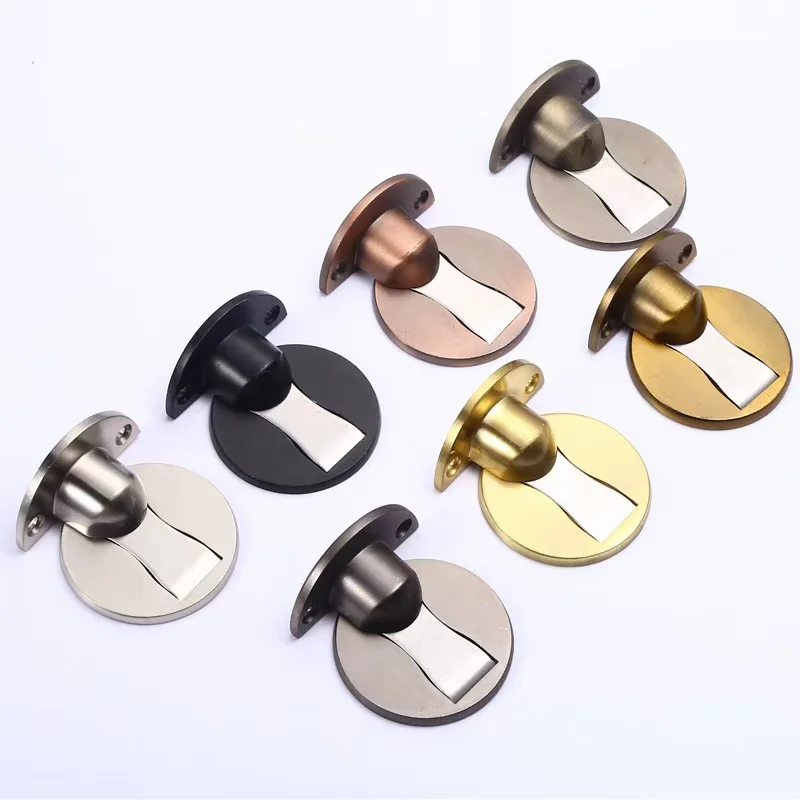
3.Magnetic Door Stoppers (Optional)
Magnetic door stoppers are increasingly popular in modern interiors.
Advantages:
• Holds the door open
• Reduces accidental door movement
• Clean and modern appearance
They are suitable for bedrooms, living rooms, and hotel rooms.
Recommended Materials and Features
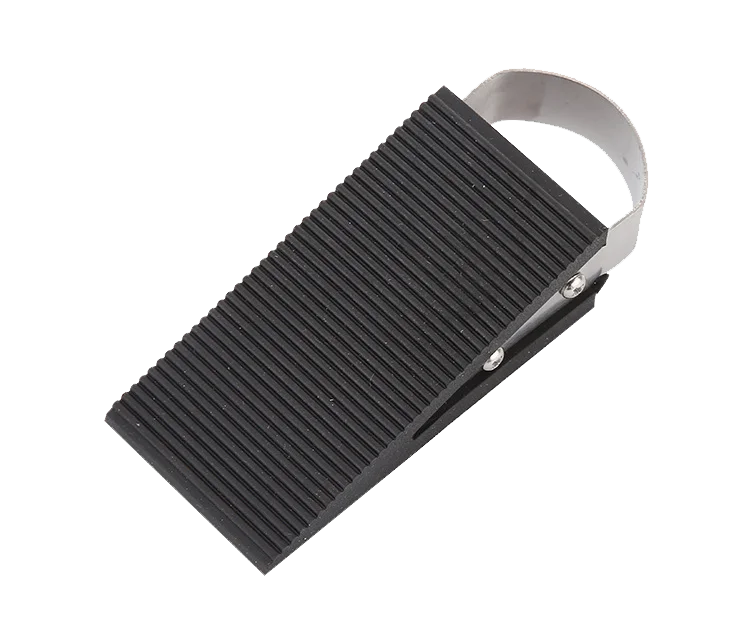
For wooden doors, a good door stopper should include:
• Stainless steel or zinc alloy body
• Rubber or silicone buffer head
• Smooth surface finish to match interior design
Rubber buffers are particularly important to absorb impact and reduce noise.
Installation Tips for Wooden Doors
• Ensure the stopper projection is sufficient to stop the door before it hits the wall • Align the stopper with the door edge or handle • Secure screws firmly into solid material
Proper positioning significantly extends the lifespan of both the door and the stopper.
Best Door Stoppers for Glass Doors
Characteristics of Glass Doors
Glass doors are widely used in:
• Bathrooms and shower rooms
• Office partitions
• Commercial spaces
They can be:
• Frameless glass doors
• Framed glass doors with aluminum profiles
Key characteristics include:
• High rigidity but fragility
• Risk of cracking or shattering
• Often cannot be drilled directly
Because glass doors are expensive and fragile, door stopper selection is critical.
Recommended Door Stopper Types for Glass Doors
1.Floor-Mounted Door Stoppers
Floor-mounted door stoppers are the most recommended solution for glass doors.
Why they work well:
• No need to drill the glass • Mounted on floor surface • Can absorb impact safely
They are widely used in bathroom and shower door applications.
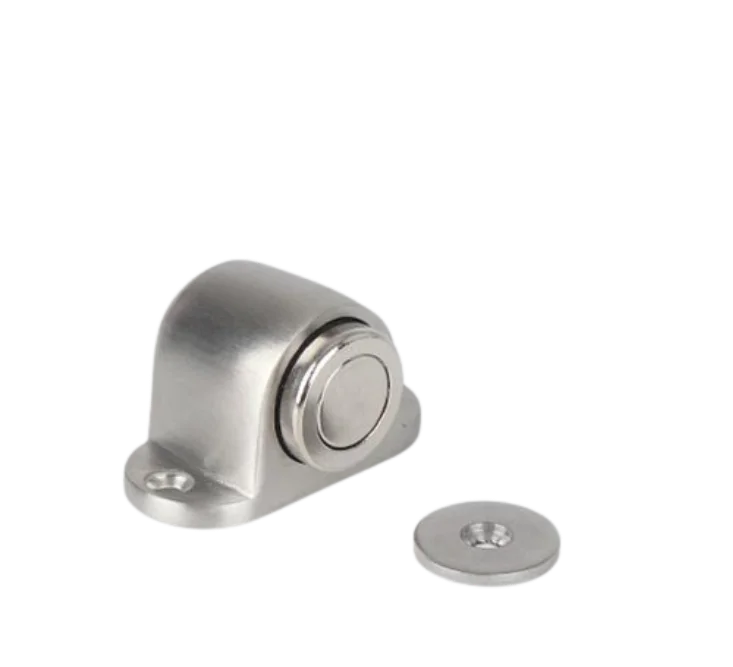
2.Magnetic Door Stoppers
Magnetic door stoppers are especially useful for glass doors in offices or bathrooms.
Advantages:
• Holds the door in an open position
• Prevents uncontrolled swinging
• Reduces accidental impacts
They should always include a rubber contact surface.
3.Adhesive-Mounted Door Stoppers (Light Duty Only)
For very light glass doors or rental properties, adhesive-mounted door stoppers may be used.
Limitations:
• Lower holding strength
• Not suitable for heavy or frequently used doors
These are best for temporary or low-impact applications.
Safety Considerations for Glass Doors
When selecting a door stopper for glass doors, safety must be the top priority.
Important considerations include:
• Rubber or silicone buffer to prevent direct metal contact
• Shock absorption capability
• Stable base fixing to prevent movement
Metal-to-glass contact should always be avoided.
Suitable Applications for Glass Door Stoppers
• Bathroom doors • Shower enclosures • Office glass partitions • Commercial display areas
In these environments, corrosion resistance and moisture resistance are also important.
Best Door Stoppers for Metal Doors
Characteristics of Metal Doors
Metal doors are commonly used in:
• Commercial buildings
• Warehouses
• Industrial facilities
• Office main entrances
Typical characteristics:
• Heavy weight
• Strong opening and closing force
• High usage frequency
Because of these factors, light-duty door stoppers are not suitable for metal doors.
Recommended Door Stopper Types for Metal Doors
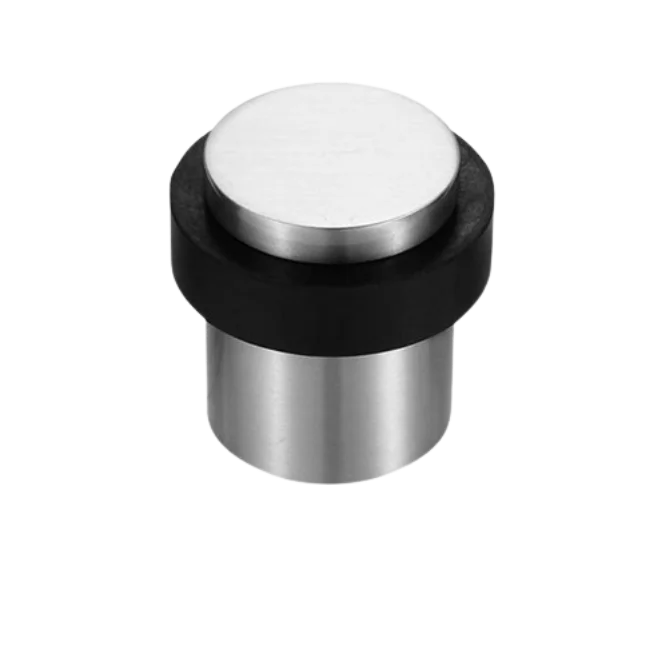
1.Floor-Mounted Weighted Door Stop
Floor-Mounted Weighted Door Stops are the most reliable choice for metal doors.
Key benefits:
• High impact resistance
• Strong base fixation
• Long service life
They are often installed on concrete floors using expansion anchors.
2.Magnetic Door Stop with Strong Holding Force
For areas where doors need to stay open, magnetic door stops are a practical solution.
Requirements:
• Strong magnet strength
• Solid metal housing
• Secure fixing screws
They are widely used in office corridors and commercial buildings.
Recommended Specifications for Metal Door Applications
A suitable door stopper for metal doors should have:
• Solid stainless steel construction
• Larger base diameter for stability
• Thick rubber buffer head
• High-quality fixing screws
These features ensure long-term durability under heavy use.
Typical Applications
• Office entrance doors • Warehouse access doors • Commercial corridors • Industrial facilities
In these areas, durability and safety are more important than decorative appearance.
Best Door Stoppers for Fire-Rated Doors
Characteristics of Fire Doors
Fire-rated doors are specially designed to:
• Resist fire and smoke
• Protect escape routes
• Automatically close in emergencies
They are commonly used in:
• Hospitals
• Hotels
• Office buildings
• Public facilities
Fire doors are typically:
• Very heavy
• Equipped with door closers
• Subject to strict regulations
Recommended Door Stopper Types for Fire Doors
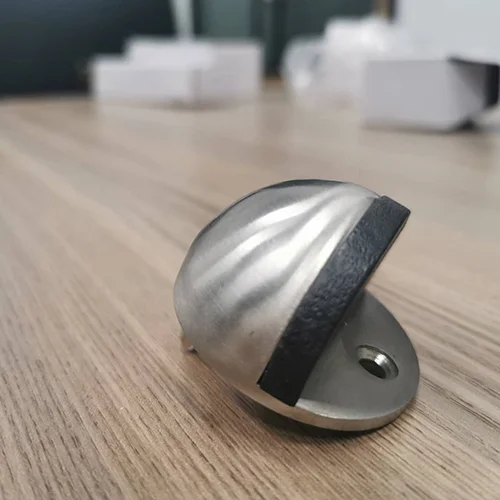
1.Heavy-Duty Floor-Mounted Door Stoppers
For basic impact protection, heavy-duty floor-mounted door stoppers are commonly used.
They must be:
• Strong enough to withstand door closer force
• Securely fixed to concrete floors
2.Fire-Rated Magnetic Door Holders (Where Permitted)
In some buildings, fire-rated magnetic door holders are used instead of standard door stoppers.
Important note:
• These devices are connected to the fire alarm system • They automatically release the door during a fire
Standard magnetic door stoppers should not be used on fire doors unless allowed by local regulations.
Key Features to Look For in Fire Door Stoppers
• High load-bearing capacity
• Durable rubber buffer
• Secure anchoring system
• Compliance with local fire codes
Always consult local regulations before installation.
Comparison Table: Door Stopper Selection by Door Type
| Door Type | Recommended Stopper Type | Mounting Method | Key Features |
| Wooden Door | Floor / Wall / Magnetic | Floor or Wall | Rubber buffer, medium strength |
| Glass Door | Floor / Magnetic | Floor-mounted | Shock absorption, no glass drilling |
| Metal Door | Heavy-duty Floor / Magnetic | Concrete floor | High strength, large base |
| Fire Door | Heavy-duty Floor / Fire-rated Holder | Concrete floor | Code compliance, high load |
Common Mistakes When Choosing Door Stoppers for Different Doors
Despite their simplicity, door stoppers are often chosen incorrectly. Common mistakes include:
1.Using Light-Duty Stoppers on Heavy Doors
This leads to:
• Loose screws
• Deformation
• Early failure
2.Ignoring Door Swing and Opening Angle
Incorrect positioning can cause:
• Door handle damage
• Incomplete stopping
3.Improper Mounting Surface Selection
Installing floor stoppers on weak or hollow surfaces reduces stability.
How to Choose the Right Door Stopper for Your Project
When selecting a door stopper, consider the following factors carefully:
1.Door Material and Weight
Heavier doors require stronger stoppers.
2.Usage Frequency
High-traffic areas need durable solutions.
3.Installation Surface
Concrete, wood, or tile floors require different fixing methods.
4.Environment
Bathrooms and outdoor areas require corrosion-resistant materials.
5.Safety and Compliance
Fire doors and public buildings must follow regulations.
.jpg)
Conclusion
Choosing the right door stopper is not just about stopping a door — it is about protecting doors, walls, users, and surrounding structures. Wooden, glass, metal, and fire-rated doors each have unique characteristics that require different door stopper solutions.
By understanding door materials, usage conditions, and safety requirements, you can select door stoppers that offer:
• Long service life
• Improved safety
• Reduced maintenance costs
For residential, commercial, and project-based applications, working with a professional door hardware supplier ensures you receive the right technical support, product quality, and customization options.