 gtag('config', 'AW-654510316');
 Introduction
Shower door seal strips are small components, but they play a critical role in the overall performance of a bathroom enclosure. A properly selected seal strip ensures effective waterproofing, reduces maintenance, and enhances the durability of the shower system.
With the increasing popularity of frameless and semi-frameless glass shower doors, the demand for high-quality sealing solutions has grown rapidly. However, many buyers—especially wholesalers and project contractors—often struggle to understand the different shower door seal strip types and their specific applications.
In this guide, we will explore the 10 most popular shower door seal strip types, including their structure, function, and best use cases. Whether you are a distributor, importer, or project buyer, this article will help you choose the right sealing solution for your market.
Quick Overview of Shower Door Seal Strip Types
| Type | Installation Position | Best For | Key Feature |
| Bottom Seal | Bottom of door | Frameless doors | Prevents water leakage |
| Side Seal | Vertical edge | Swing doors | Stops side splashes |
| Magnetic Seal | Door closing edge | Hinged doors | Tight closure |
| Fin Seal | Sliding gaps | Sliding doors | Flexible sealing |
| H-Seal | Glass-to-glass | Frameless | Strong grip |
| U-Channel Seal | Glass edge | Universal | Easy installation |
| T-Shape Seal | Aluminum frame | Sliding systems | Stable fixing |
| Bulb Seal | Gap filling | Large gaps | Compression sealing |
| Threshold Seal | Floor/tray | Walk-in showers | Water barrier |
| Combination Seal | Multi-position | High-end systems | Multi-function |
1.Bottom Seal Strip (Drip Rail Type)
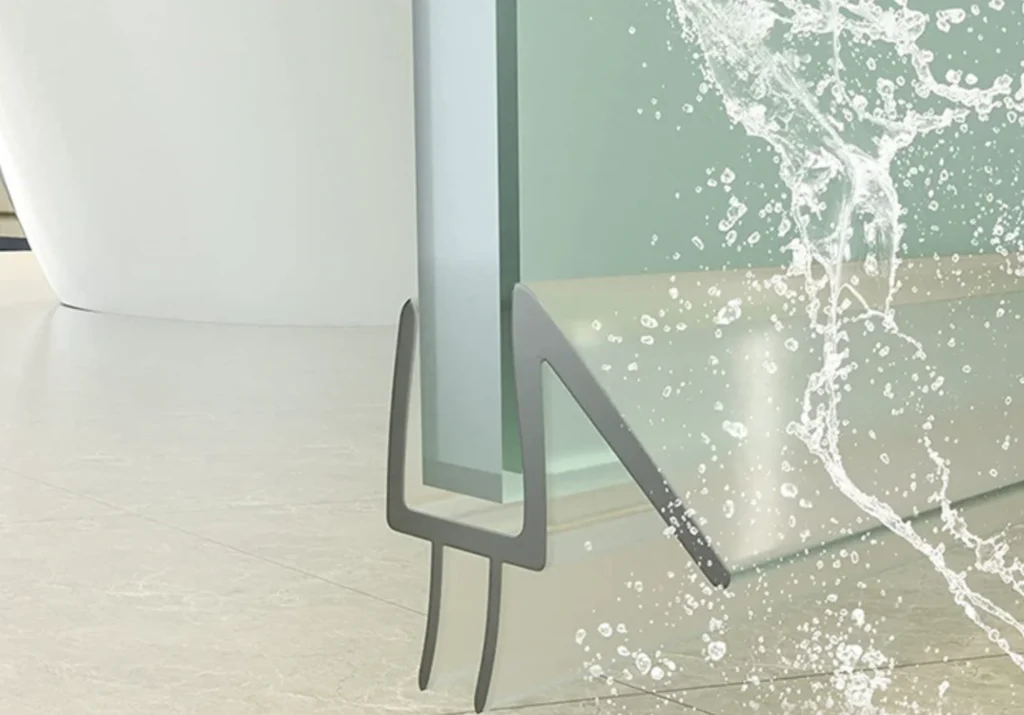
🔍 Structure & Design
Bottom seals are typically designed with a rigid U-channel base that grips the glass and a soft sealing lip or drip rail extending outward or inward. Some advanced designs include dual fins for enhanced sealing.
⚙️ Key Features
• Integrated drip rail directs water back into the shower area • Optional double-fin structure for improved splash resistance • Available in straight or angled designs (5°–45° drip angle) • Compatible with frameless glass (6–12mm)
🏗 Applications
• Frameless hinged doors • Pivot doors • Inward and outward opening systems
💡 Professional Insight
For markets with high water pressure (e.g., hotels), bottom seals with extended drip rails (≥15mm) perform significantly better.
2.Side Seal Strip (Vertical Lip Seal)
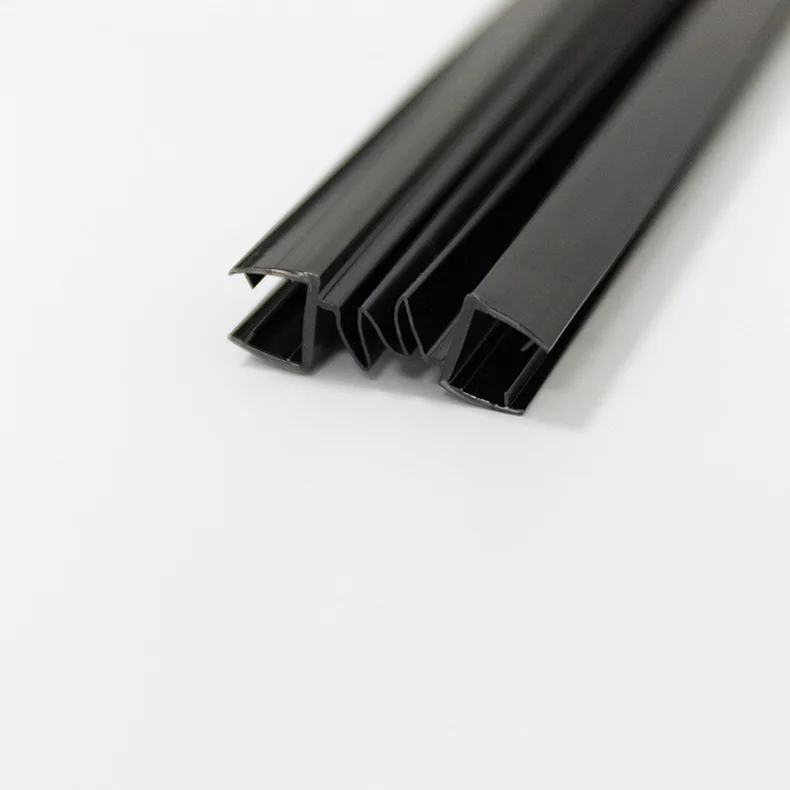
🔍 Structure & Design
Side seals usually consist of a clear polycarbonate or PVC carrier with a flexible sealing lip that presses against an adjacent surface (glass or wall).
⚙️ Key Features
• Slim profile for minimal visual impact • Soft lip ensures tight contact without friction noise • Can be designed as single-lip or double-lip
🏗 Applications
• Glass-to-wall sealing
• Glass-to-glass vertical joints
• Supplementary sealing with magnetic strips
💡 Professional Insight
Double-lip designs are preferred in premium residential projects for better splash containment.
3.Magnetic Seal Strip
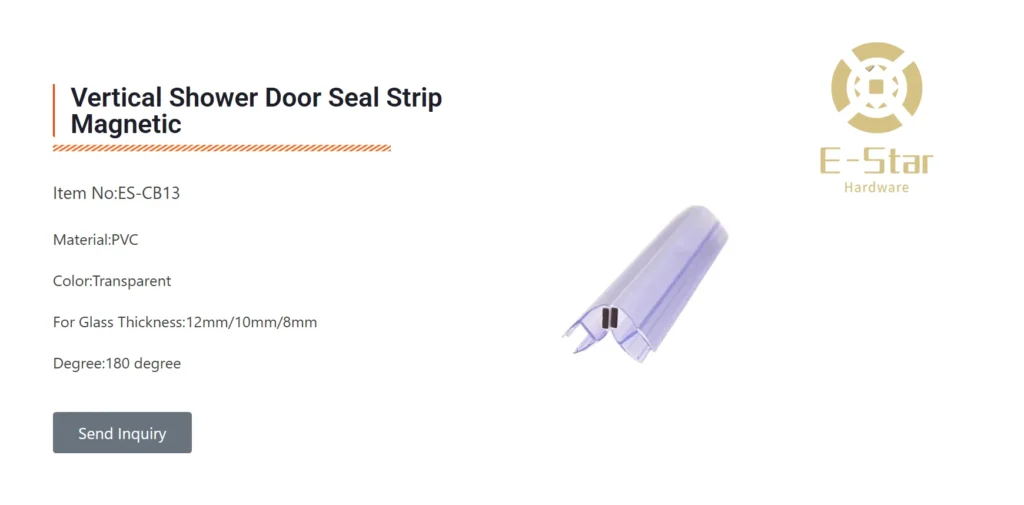
🔍 Structure & Design
Magnetic seals integrate magnetic cores within PVC or co-extruded profiles. They are produced in pairs to ensure proper alignment and sealing.
⚙️ Key Features
• Strong magnetic attraction ensures automatic door closure • Available in 90°, 135°, 180° configurations • Co-extruded soft lips improve waterproofing
🏗 Applications
• Glass-to-glass hinged doors • Corner shower enclosures • High-end frameless systems
💡 Professional Insight
The magnetic force consistency is critical—low-quality magnets lead to poor sealing and customer complaints.
4.Fin Seal Strip (Multi-Fin Flexible Seal)
🔍 Structure & Design
Fin seals are characterized by multiple thin, flexible fins extending from a central profile. These fins adapt dynamically to irregular gaps.
⚙️ Key Features
• High flexibility for uneven or moving gaps • Reduces noise in sliding systems • Low friction during door movement
🏗 Applications
• Sliding shower doors • Overlapping glass panels • Bypass door systems
💡 Professional Insight
More fins ≠ better performance. Optimal designs balance flexibility and durability to avoid deformation over time.
5.H Types of Shower Door Seals (Glass-to-Glass Connector)
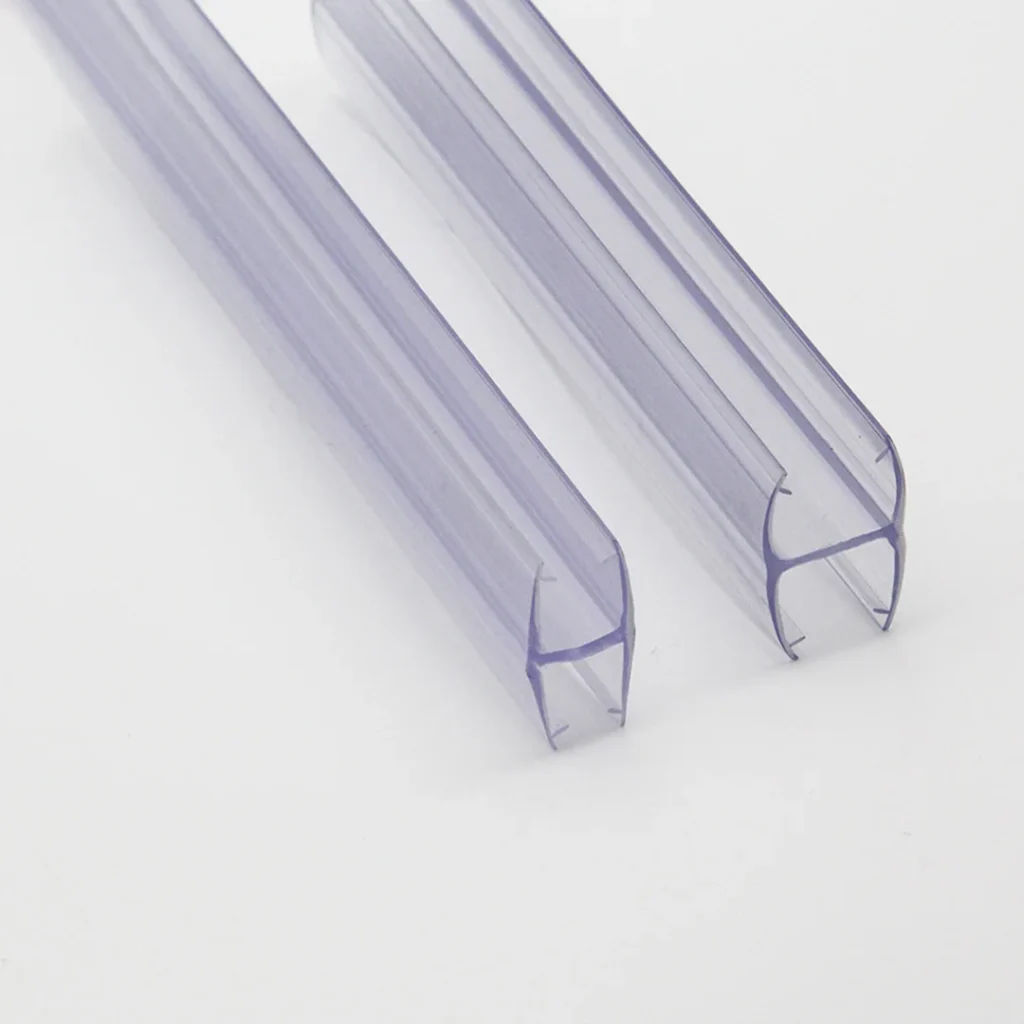
🔍 Structure & Design
The H-seal features a dual-channel profile, allowing it to hold two glass panels simultaneously while sealing the joint.
⚙️ Key Features
• Strong grip on both glass panels • Maintains alignment and spacing • Clean, frameless aesthetic
🏗 Applications
• Inline shower enclosures • Fixed panel + door connections • Frameless glass partitions
💡 Professional Insight
Tolerance control is key—too tight = installation difficulty; too loose = leakage risk.
6.U-Channel Seal Strip (Universal Edge Seal)

🔍 Structure & Design
A simple U-shaped extrusion that fits onto the glass edge, often combined with a soft sealing lip or fin.
⚙️ Key Features
• Easy installation (push-fit design) • Wide compatibility with different glass thicknesses • Can be customized with additional sealing elements
🏗 Applications
• General-purpose sealing • Replacement and maintenance markets • OEM extrusion solutions
💡 Professional Insight
This is one of the most versatile and export-friendly profiles, especially for large-volume orders.
7.T-Shape Seal Strip (Track Insert Type)
🔍 Structure & Design
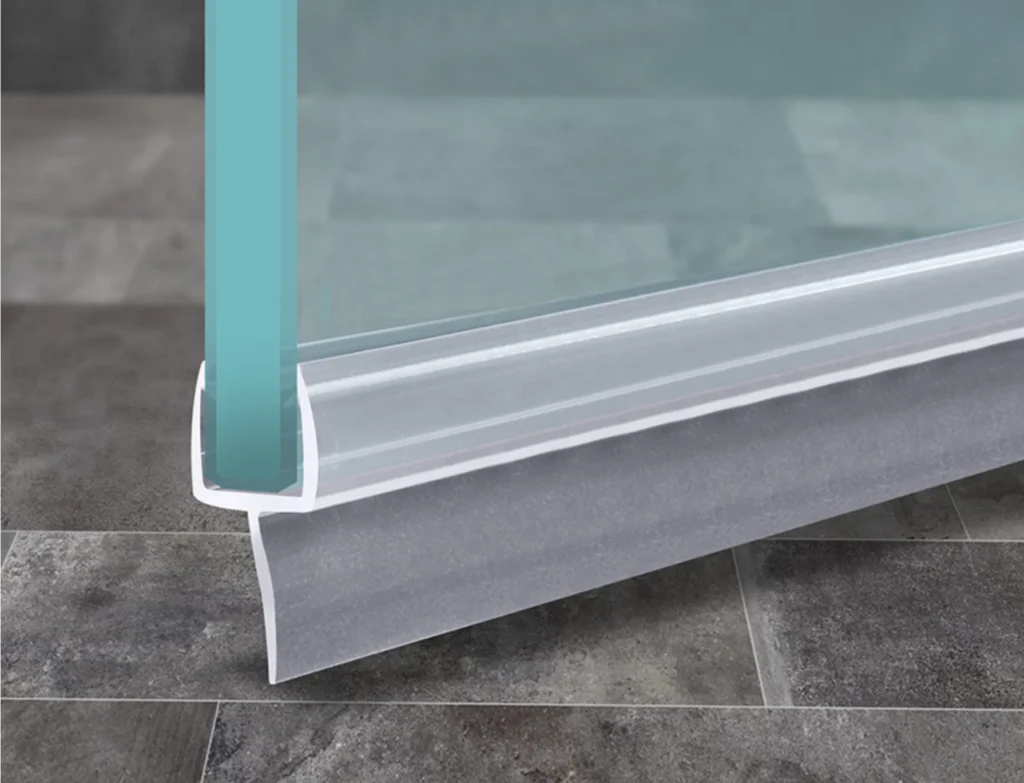
T-shape seals are designed to fit into grooves or aluminum profiles, with the vertical section acting as the sealing element.
⚙️ Key Features
• Secure insertion into track systems • Strong structural stability • Resistant to displacement during operation
🏗 Applications
• Sliding door systems • Framed shower enclosures • Aluminum profile structures
💡 Professional Insight
Critical dimension: T-base width tolerance must match the aluminum slot precisely.
8.Side Bulb Seal Strip (Compression Seal)
🔍 Structure & Design
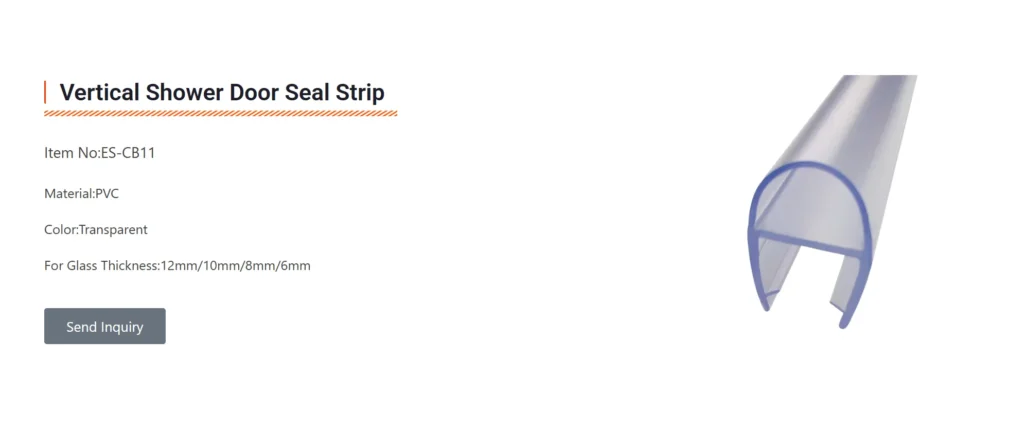
Bulb seals feature a hollow or solid rounded bulb, designed to compress when the door closes.
⚙️ Key Features
• Excellent for large gap sealing (3–10mm) • Provides cushioning effect • Improves acoustic and thermal insulation
🏗 Applications
• High-end shower doors • Doors with alignment tolerance issues • Heavy glass systems
💡 Professional Insight
EPDM bulb seals perform better in long-term elasticity retention compared to standard PVC.
9.Threshold Seal (Water Barrier)
🔍 Structure & Design
Installed directly on the floor, threshold seals are typically low-profile strips with a raised edge, forming a physical water barrier.
⚙️ Key Features
• Prevents water overflow in curbless showers • Works in combination with bottom seals • Available in flexible silicone or rigid acrylic
🏗 Applications
• Walk-in showers • Barrier-free bathroom designs • Retrofit waterproofing solutions
💡 Professional Insight
Height selection (usually 5–15mm) must balance water control and user comfort.
10.Multi-Purpose Combination Seal
🔍 Structure & Design
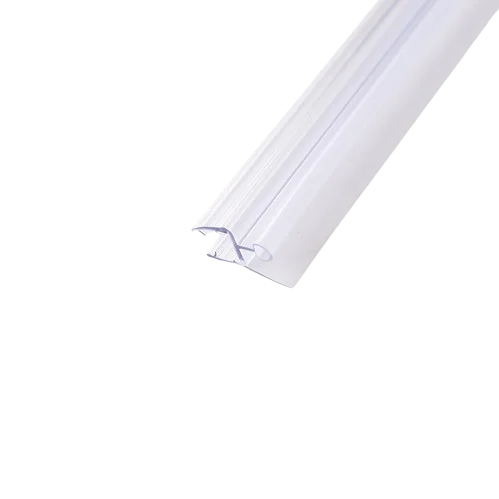
These seals are co-extruded complex profiles combining multiple sealing functions into a single unit.
⚙️ Key Features
• Combines drip rail + fin + lip in one design • Reduces the number of components required • Enhances overall sealing performance
🏗 Applications
• High-end frameless shower systems • Customized OEM projects • Premium residential and hotel installations
💡 Professional Insight
Combination seals are ideal for product differentiation, allowing brands to create unique, patented designs.
Materials Used in Shower Door Seal Strips
PVC (Polyvinyl Chloride)
• Most widely used material
• Cost-effective
• Transparent or semi-transparent
Silicone
• Premium material
• Anti-yellowing
• More flexible and durable
Rubber (EPDM)
• Excellent aging resistance
• Suitable for heavy-duty applications
How to Choose the Right Shower Door Seal Strip?
When selecting the appropriate seal strip, consider the following factors:
1.Glass Thickness
Ensure compatibility with 6mm, 8mm, 10mm, or 12mm glass.
2.Door Type
• Sliding doors → fin seals, T-shape seals • Hinged doors → magnetic seals, bottom seals
3.Gap Size
Measure the gap carefully to select the correct profile.
4.Installation Environment
• Residential → standard PVC • Hotel projects → higher durability materials
Frequently Asked Questions (FAQs)
1.What are the most common shower door seal strip types?
The most common shower door seal strip types include bottom seals, side seals, magnetic seals, fin seals, H-seals, U-channel seals, T-shape seals, bulb seals, threshold seals, and combination seals. Each type is designed for different door structures and sealing functions.
2.What is a threshold seal in a shower door?
A threshold seal is a strip installed on the floor or shower tray. It acts as a water barrier to prevent water from flowing out of the shower area. It is commonly used in frameless or walk-in shower designs.
3.Which seal strip is best for frameless shower doors?
For frameless shower doors, the most effective solution is usually a combination of bottom seals (with drip rails), magnetic seals for door closure, and side seals for vertical edges. This combination provides complete waterproof protection.
4.How do I choose the right shower door seal strip?
You should consider several factors:
• Glass thickness (6mm, 8mm, 10mm, 12mm)
• Door type (sliding or hinged)
• Gap size between panels
• Installation environment (residential or commercial)
Choosing the correct profile ensures better sealing and longer lifespan.
5.What materials are used for shower door seal strips?
Common materials include:
• PVC (cost-effective and widely used)
• Silicone (premium, anti-yellowing, flexible)
• EPDM rubber (durable with excellent elasticity)
Each material has different advantages depending on the application.
6.Why is my shower door still leaking after installing a seal?
Water leakage may be caused by:
• Incorrect seal type
• Improper installation
• Gaps that are too large
In many cases, combining a bottom seal with a threshold seal provides better waterproof performance.
7.How often should shower door seals be replaced?
Typically, shower door seals should be replaced every 1–3 years depending on usage, water quality, and material quality. Signs like yellowing, hardening, or deformation indicate it’s time to replace them.
8.Are shower door seal strips universal?
Some seal strips, like U-channel seals, are more universal. However, most seals are designed for specific glass thicknesses and applications, so it’s important to select the correct type and size.
Conclusion
Understanding different shower door seal strip types is essential for selecting the right solution for any bathroom project. Each type serves a specific function, from preventing water leakage to ensuring smooth door operation.
For wholesalers, distributors, and project buyers, offering a complete range of seal strip options can significantly improve competitiveness in the market.
E-Star provides a full range of high-quality shower door seal strips, including standard and customized solutions for global customers. Whether you need bulk supply or OEM extrusion design, choosing the right partner ensures both quality and consistency.

